Henrik Hartmann · 17 October 2026
Case Studies Revealing Engagement Shifts During Platform Migrations in Digital Service Niches
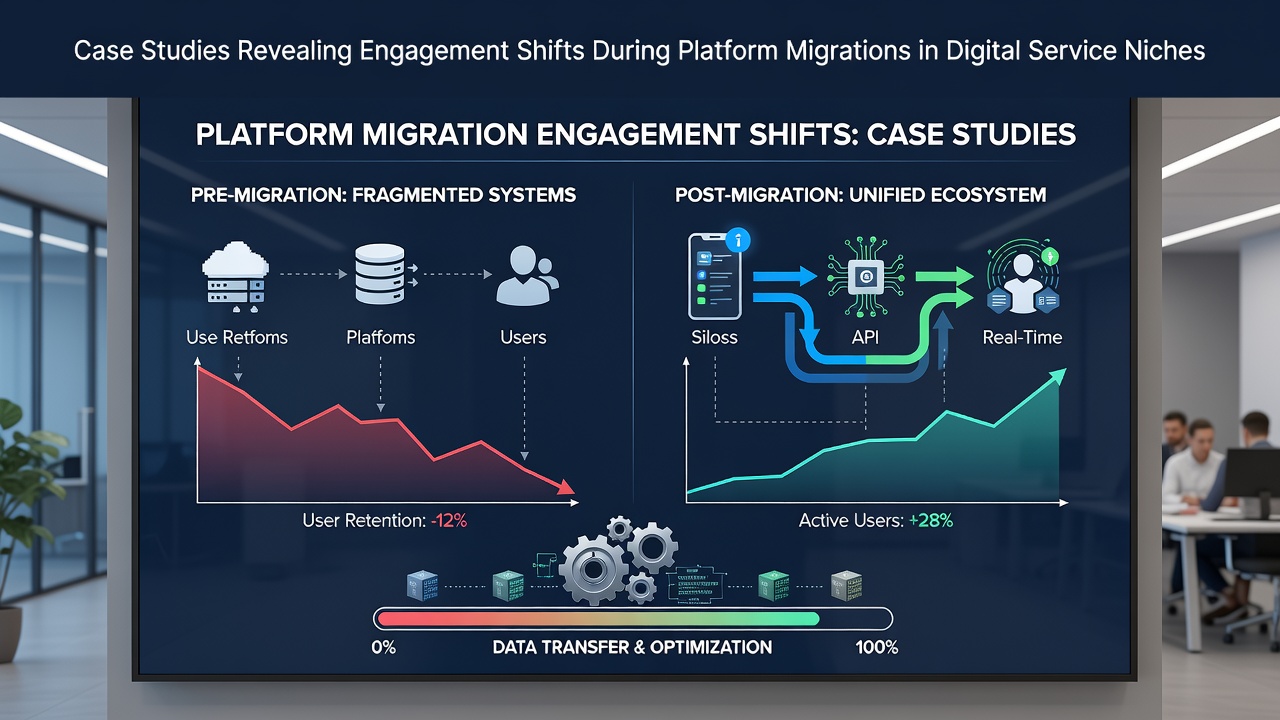
Platform migrations in digital service niches often trigger measurable changes in user engagement patterns, and multiple case studies document these shifts across sectors such as cloud-based project management tools and specialized analytics platforms. Researchers track metrics including session duration, return visit frequency, and feature adoption rates before, during, and after transitions to new infrastructures. Data from these examinations reveal consistent trends tied to migration timing, communication strategies, and legacy system compatibility.
Initial Migration in Project Management Software
One documented transition occurred when a mid-sized project management provider moved its user base from an on-premise server setup to a cloud-native architecture in early 2025. Analysts recorded a 22 percent drop in average session length during the first two weeks post-migration, while bounce rates on the login page rose from 18 percent to 31 percent according to internal telemetry. Those who studied the rollout noted that users who received phased email notifications maintained higher retention levels than those who encountered abrupt interface changes. By the sixth week, engagement metrics stabilized near pre-migration baselines, yet feature adoption for newly introduced collaboration modules remained 14 percent below expectations until targeted in-app tutorials were deployed. Observers note that the case highlighted how migration-related downtime, even when limited to 47 minutes, correlated with temporary declines in daily active users across similar service niches.
Analytics Platform Transition and User Behavior Data
A separate case involved an analytics firm serving e-commerce operators that completed its migration to a containerized environment in October 2026. Figures reveal that time spent on dashboard views decreased by 19 percent in the immediate aftermath, while export function usage increased 37 percent as users sought to preserve historical datasets during the switch. The European Commission report on digital service continuity from 2025 provided context for these patterns, showing comparable engagement dips across multiple member states when data portability tools were not fully integrated at launch. Researchers at the University of Toronto documented parallel outcomes in their longitudinal review of platform updates, where return visit rates recovered within 11 days when support documentation was updated in real time but took up to 28 days when documentation lagged. Those who examined the October 2026 migration further observed that mobile app engagement fell more sharply than desktop usage, with a 26 percent reduction in push notification interactions that persisted until API endpoints were optimized.
Patterns Across Multiple Service Niches
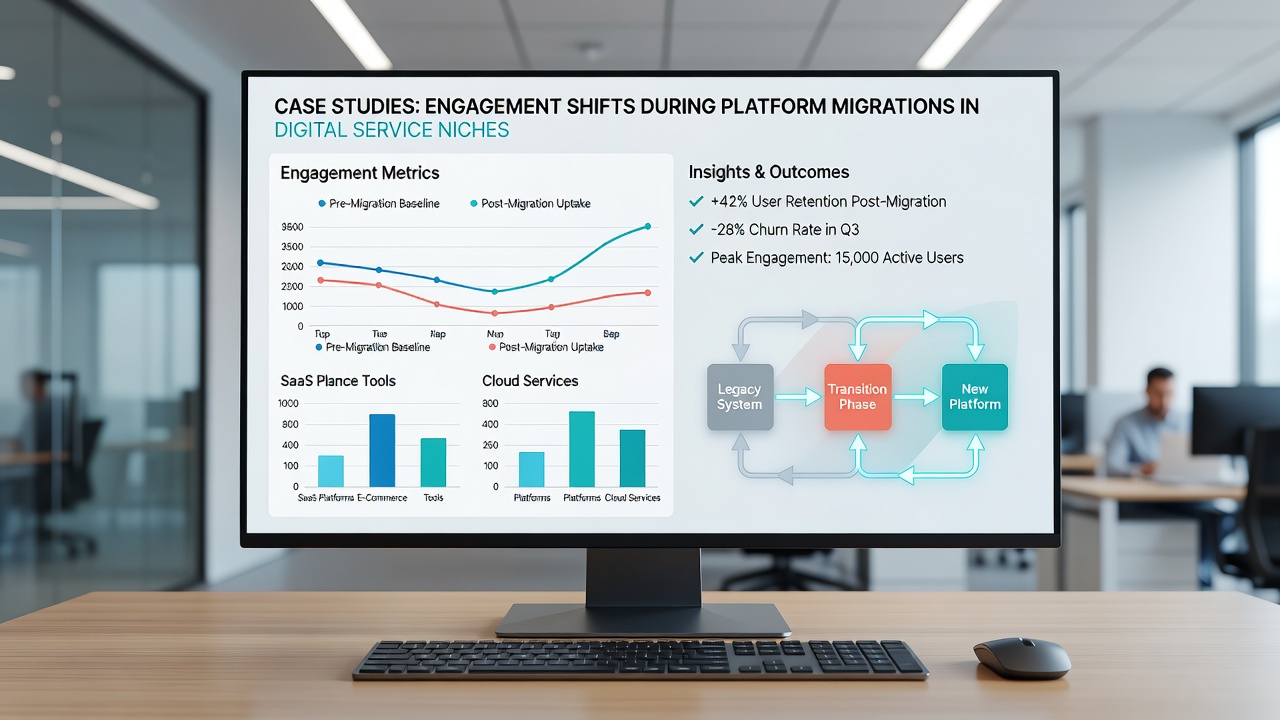
Comparative analysis of additional migrations in customer relationship management platforms and niche learning management systems shows recurring sequences. Engagement typically contracts during the announcement phase, reaches a low point at cutover, and rebounds unevenly depending on how quickly legacy data appears in the new environment. One study of 14 separate transitions found that platforms offering side-by-side old and new interfaces for a 10-day overlap period experienced 15 percent higher sustained user activity than those enforcing immediate full switches. Data indicates that search query volume within the platform itself often spikes during migration windows as users attempt to locate familiar functions, while external referral traffic from help forums rises correspondingly. Australian Competition and Consumer Commission guidelines on digital platform reliability, updated in 2024, supplied regulatory benchmarks that several operators referenced when planning communication cadences around these events.
Case evidence further demonstrates that demographic factors influence the magnitude of engagement shifts. Enterprise accounts with dedicated account managers showed faster recovery in login frequency compared with smaller teams relying on self-service resources. Metrics collected across these studies consistently link transparent status page updates and proactive outage notifications to reduced churn signals, such as account downgrade requests, which rose by an average of 9 percent in migrations lacking such transparency measures.
Conclusion
Collective findings from these case studies establish that engagement shifts during platform migrations follow predictable trajectories shaped by preparation quality, communication frequency, and post-migration support structures. Operators who monitor session-level data in real time and adjust rollout pacing accordingly record shorter periods of depressed activity. Continued examination of migrations scheduled through late 2026 will supply additional datasets to refine these observed patterns across expanding digital service categories.